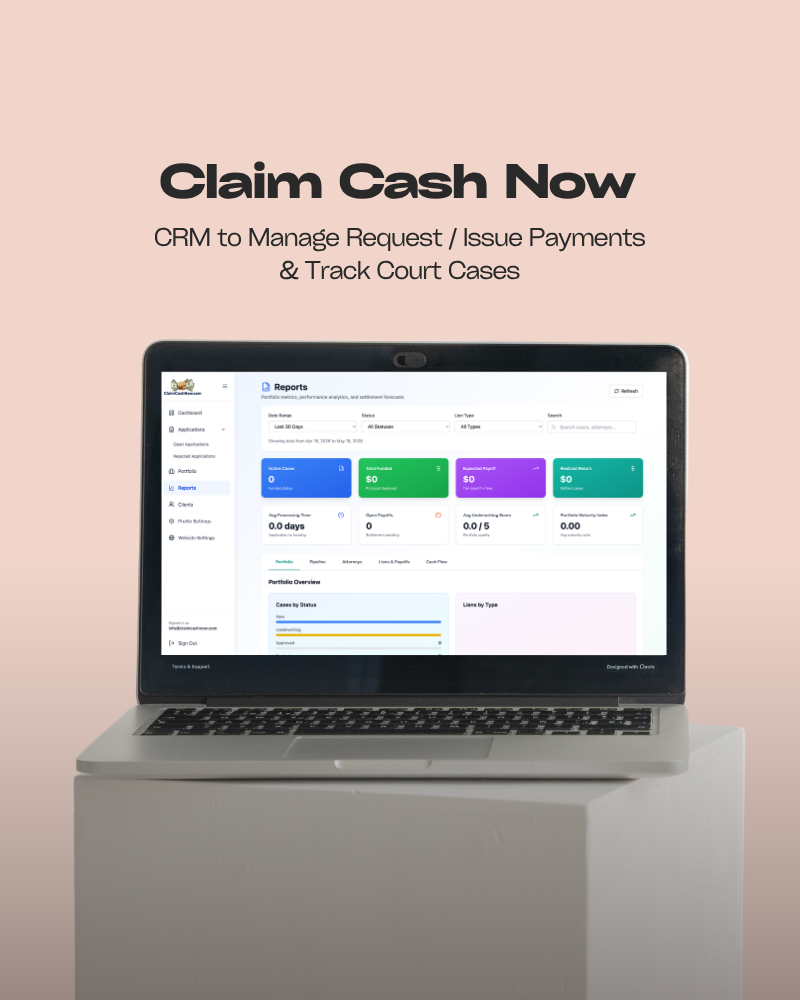
A scope cut to one job
We write down every feature you asked for, then agree which single workflow version one has to prove. Everything else is dated, not deleted.

MVP development services for founders and product teams who need something real in front of users. We cut the roadmap to the one workflow that proves the idea, build it properly, and leave you owning the code.
4-10 weeks
Typical MVP build window
One workflow
What version one actually covers
Yours
Repository from day one
90 days
Warranty after launch
MVP development is building the smallest version of a product that a real user can complete a real task with. Minimum viable product means minimum, not unfinished: one workflow, done properly, released to people who are not your team.
The MVP approach to product development exists to buy information. You are not trying to launch a company in version one. You are trying to find out whether the thing you assumed is true, before you spend the rest of the budget on it.
We write down every feature you asked for, then agree which single workflow version one has to prove. Everything else is dated, not deleted.
Screens designed for the one path a user takes. An MVP that looks unfinished gets feedback about the polish, not the idea.
React or Next.js with Laravel or Node underneath. Boring, mainstream and staffable, so the MVP survives contact with a future team.
If the question is whether people will pay, payments ship in version one. If it is not, they wait. The scope follows the question.
Event tracking on the core workflow, so the launch produces evidence instead of opinions about how it went.
What we deliberately left out, what the code is ready for, and what would need rebuilding at scale. No surprises for whoever builds next.
The MVP product development process we run on every build, five stages, none of them skippable.
| Stage | What happens | What it decides |
|---|---|---|
| 1. Problem and riskiest assumption | Write down what has to be true for the product to work | What version one has to test |
| 2. Scope cut | One workflow in, everything else dated on a roadmap | The price and the timeline |
| 3. Design the single path | Screens for the one journey, not the full product | Whether users understand it without a demo |
| 4. Build and instrument | Ship the workflow with tracking on every key step | Whether it works, and where users drop |
| 5. Release and read the data | Real users, real usage, two to four weeks of evidence | Build more, change direction, or stop |
Stage five is the point of the whole exercise. An MVP nobody outside the team has used has not finished.
MVP web development and mobile app MVPs, across the shapes that come up most.
Three rules. They are the reason MVP development stays a fixed number instead of an open-ended retainer.
Every good idea during the build gets written down and dated. None of them enter the current scope. This single habit is what prevents a ten-week MVP becoming a nine-month product.
Version one goes to people outside the company. A product only your investors have seen has not been tested, and a demo does not produce the data you paid for.
If the launch data says the assumption was wrong, the honest recommendation is to change direction rather than to sell you phase two. That is the whole point of building small first.
Ownership, deadlines and defects are where web projects go wrong. We put all three in the contract, not just on this page.
Repository, hosting and domain credentials are in your name before we write a line of code. Not handed over at the end, not held as leverage.
Milestone dates are fixed in writing before the project starts. You always know what ships next and when.
Anything that breaks because of how we built it gets fixed free for 90 days after launch.
MVP app development cost is driven by the number of user roles, whether money moves through the product, and how many external systems it must talk to. In this market a focused single-workflow MVP typically lands between AED 35,000 and AED 90,000, with mobile builds at the higher end and simple internal tools below it. We quote one fixed figure after the scope-cut session, because a range quoted before that session is a guess dressed up as a price.
In software development an MVP is the smallest working build that lets a real user complete the core task end to end. It is fully functional for that one path and deliberately absent everywhere else. The distinction that matters: a prototype is something you show, an MVP is something people use. If nobody outside the team can do their job with it, it is a prototype.
Same idea, different vocabulary. In agile development the MVP is the first increment that delivers user-visible value and can be released at the end of a sprint cycle. In product development it is the version that tests the riskiest assumption in the business case. Both definitions push the same behaviour: release something real early, learn from usage, and let evidence rather than the roadmap decide what gets built second.
For a mobile app, the MVP is usually one platform, one user type and one core action, with the account and settings screens stripped to the minimum. For MVP website development it is one workflow with real data behind it rather than a marketing site with a signup form. In both cases the question is the same: what is the least we can build that still lets someone finish the job we claim to make easier?
A UAE claims business came to us wanting a full portal with dashboards, document management, agent hierarchies and reporting. Version one was a single submission form, a status field and an email trigger, built in six weeks. The evidence from real submissions changed the second phase substantially, and two of the four modules on the original roadmap were never built because usage showed nobody needed them.
Both. MVP development services for startups are a large part of this work, usually pre-seed or seed teams who need something live before a raise or a first customer. We also build first versions for established companies launching a new product line, where the constraint is internal approval rather than funding. The process is identical: cut the scope, ship the workflow, read the data.
You get the code, the analytics and a written note on what we left out and why. From there, some clients take it in-house, some hire us for phase two, and some stop because the data told them to. We do not lock the build behind our own hosting or a proprietary framework, so all three of those are real options rather than theoretical ones.
The willingness to remove things. Plenty of MVP development companies will quote your entire feature list, because a bigger scope is a bigger invoice. The value of a bespoke MVP development partner is in the argument about what not to build, and in shipping fast enough that the market answers your question before the budget runs out.
Send your brief and get a fixed scope, a written timeline and a real number back within one business day. No discovery-call maze, no sales sequence.