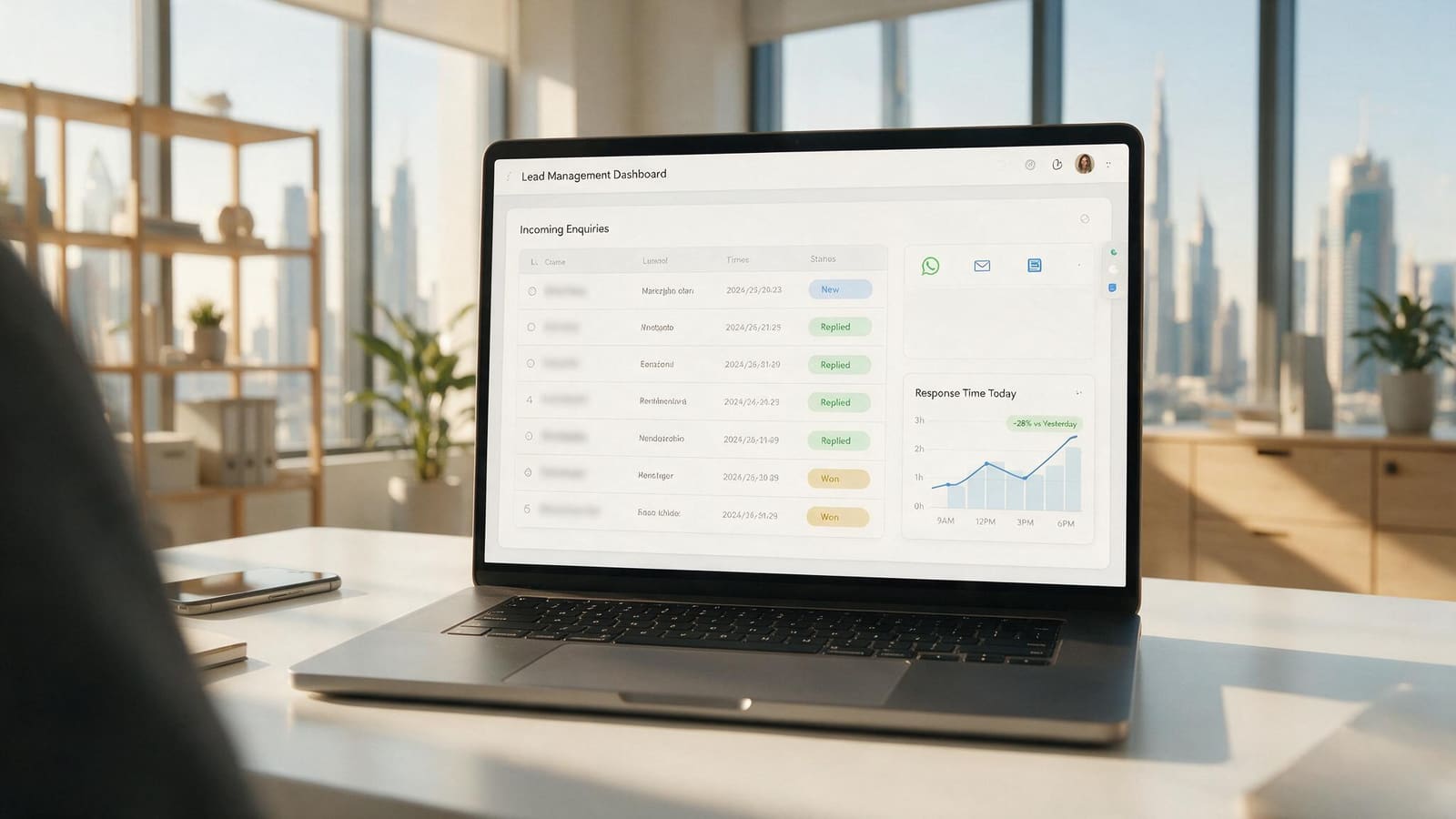
Among the messages in our archive, one is unusually specific and has stayed with us. Paraphrased only enough to remove the identifying details:
"I need to make sure that leads are not going to the other company CRM. I need to make sure I have my CRM in the code."
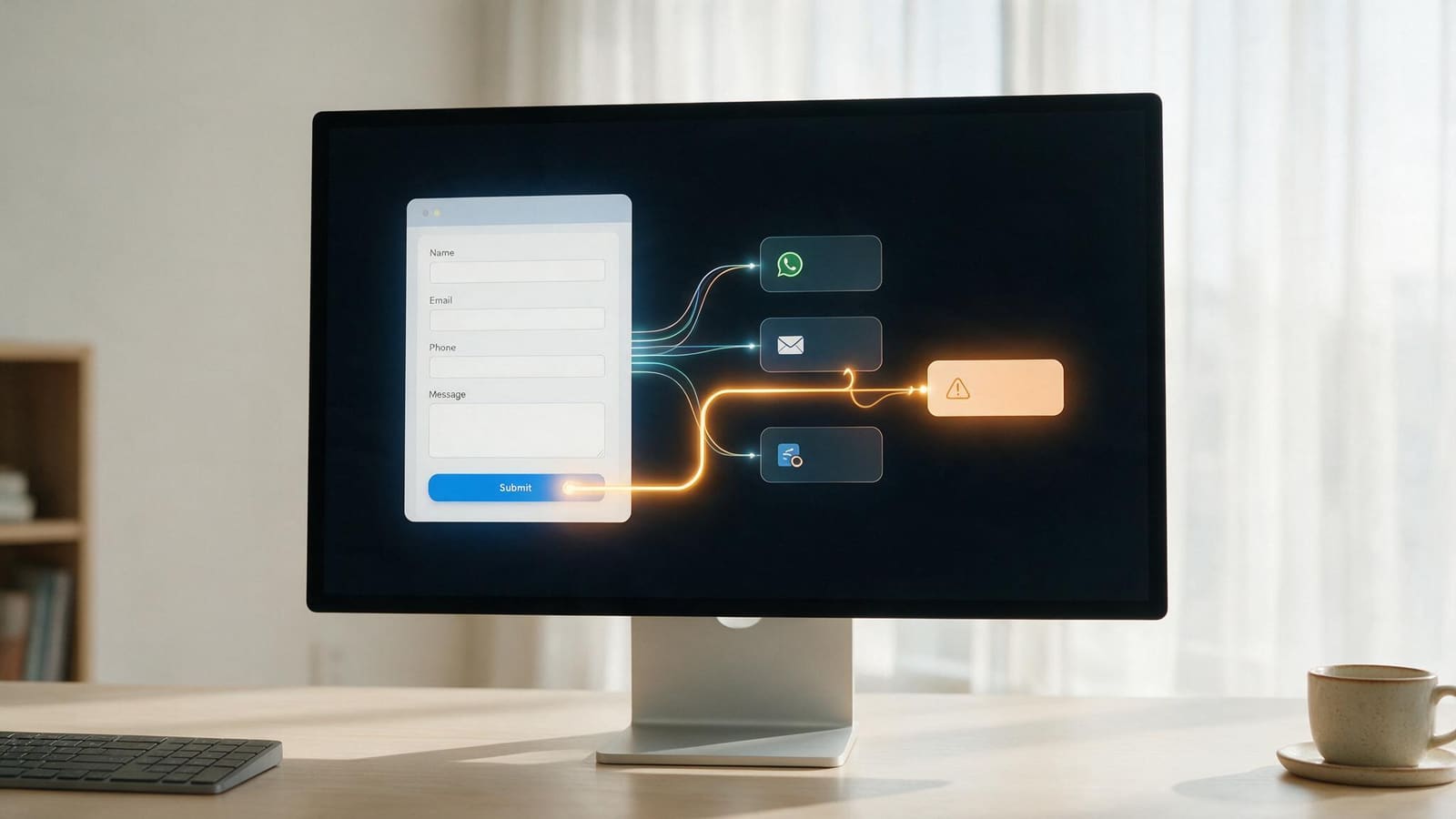
He had already paid for the website. He had the files. What he had discovered, some months after parting with the agency that built it, was that the enquiry form on his own site was still posting into a CRM he did not control.
This is not usually malice. It is what a website ownership agency arrangement quietly becomes when a site is built inside somebody else's toolset and nobody writes down where the wires go. But the effect is the same either way, and it is the reason we put ownership at the front of how we work rather than in the small print.
Who owns website accounts is not the same as who owns the route
People check the wrong thing. They ask whether they own the website, get told yes, and stop. The website is the easy part. What matters commercially is the route: the path an enquiry travels from a stranger's phone to somebody in your business who can answer it.
That route usually passes through four or five services, and each one has an account, and each account has an owner.
| The thing | The question that actually matters |
|---|---|
| Domain name | Is the registrar account in your company's name, with your billing card? |
| DNS | Who can change where the domain points? This is the master key |
| Form handler | Where does the submission actually go, and whose account receives it? |
| Email or CRM | Whose login is the destination inbox or pipeline attached to? |
| Analytics and pixels | Whose account owns the historic data, and can it leave with them? |
The domain and the DNS are the ones people underestimate. Whoever controls DNS can point your website, and your email, anywhere they like, in about ninety seconds. It is the single most important account in the list and it is routinely left with whoever set it up.
Why nobody notices
A form that posts to the wrong place fails in the most reassuring way possible. The visitor fills it in, presses the button, and sees a thank-you message — because on most sites that message is a front-end behaviour that runs regardless of what happened to the data. Nothing errors, nothing turns red, no support ticket gets raised.
The business simply receives fewer enquiries than it should, gradually attributes that to a quiet market, and never connects it to a supplier change eight months earlier.
The five checks
Each of these takes minutes and none of them require a developer.
- Log into the domain registrar yourself. Not through anybody. If you cannot, you do not control the domain, whatever you were told.
- Look at who holds the DNS. Often a different provider from the registrar. Confirm your own login works there too.
- Submit your own form and watch where it lands. Use a real address you can check. If the message does not arrive at a destination you own, you have found the problem. Do not settle for the thank-you screen.
- Open the analytics and ad accounts and check the admin list. You want your account listed as owner or admin, not merely as a user somebody else granted.
- Ask which CRM or inbox the form writes into, and get that in writing. If the answer is a tool you have never logged into, that is the finding.
Ask for admin, not access
The distinction is the whole thing. Access is something another party grants you and can withdraw. Admin is something you hold. A supplier who manages your accounts day to day is entirely normal and often sensible — a supplier who is the only one who can is a risk you are carrying without pricing it.
This is reasonable to arrange at the start and awkward to arrange later, which is precisely why it should be arranged at the start. Any supplier confident in their work will understand the logic. We hand over ownership on day one for the same reason: a client who stays because leaving would be painful is not a client relationship, it is a hostage situation with invoices.
Run the checks before you change web agency Dubai suppliers
The archive is full of relationships ending, and they rarely end tidily:
"Can you please send me the open files (source files) so that I can see if we can get another developer to help? Please send me all the work you have done so far."
That request goes very differently depending on whether the accounts were already in the client's name. When they were, a supplier change is an afternoon of admin. When they were not, it becomes a negotiation, conducted at exactly the moment goodwill has run out — and the leads keep flowing to the wrong place for the whole of it.
Run the five checks this week, while nobody is annoyed with anybody. If they all pass, you have lost twenty minutes. If one of them fails, you have found it at the cheapest possible moment.