A line arrives in our inbox often enough that it has become a category of its own. Stripped of the details that would identify anybody, it reads:
"We are not receiving leads from our website. I am happy with our website design."
It is the most common way a broken website lead generation path gets described, and both halves are usually true. People treat that as a contradiction. It is not one. A site can be genuinely well made — proportionate, quick, on brand, the sort of thing you are pleased to send a link to — and still contain no working path from a stranger arriving to an enquiry landing somewhere a human reads it.
Lead generation is a website request, not an ads request
We keep an archive of public project briefs, currently 30,096 of them. 690 ask for lead generation in some form. What those briefs attach the request to is the interesting part:
| What the lead-generation brief also mentions | Briefs |
|---|---|
| A website or landing page | 319 |
| SEO or organic ranking | 195 |
| A CRM | 176 |
| Google or Meta ads | 137 |
| 34 |
Advertising is the smallest of the four large categories. The request people are actually making, most of the time, is make the website produce enquiries — and it is usually made after the site already exists and has not been producing any.
Website lead generation: the five places the path breaks
1. There is no obvious route to contact you
Not a missing contact page. Almost every site has one. The break is that the route only exists in the navigation, so a visitor who has just finished reading the one page that convinced them has to go looking. Every page that argues for you needs its own way to act on it, at the point the argument lands.
2. The form asks for more than the visitor is ready to give
There is a straight trade between how much you ask and how many people finish. A first contact needs a name, one way to reach the person, and a sentence about what they want. Everything else — company size, budget bracket, how they found you — is a question you can ask in the reply, once there is a conversation to ask it in.
Watch for the field that exists because a form builder offered it rather than because anybody reads the answer.
3. Nothing near the ask suggests you can be trusted
One client put the requirement plainly:
"Yes we need to drive leads through clear calls to action. The aesthetics, functionality and images are all important to us too."
Aesthetics and calls to action get attention. What sits between them usually does not. The moment before somebody submits a form is the moment they most want evidence — a named piece of work, a review with a real person attached, a licence number, a plain answer about what happens next. Proof on an About page, three clicks from the form, is proof nobody reads at the moment it matters.
4. The enquiry arrives and nobody answers it quickly
This one is invisible from inside the business, because the site did its job and the failure happens afterwards. From the same archive, on the other side of the table:
"I haven't heard back from you so I will have to award the project to another freelancer."
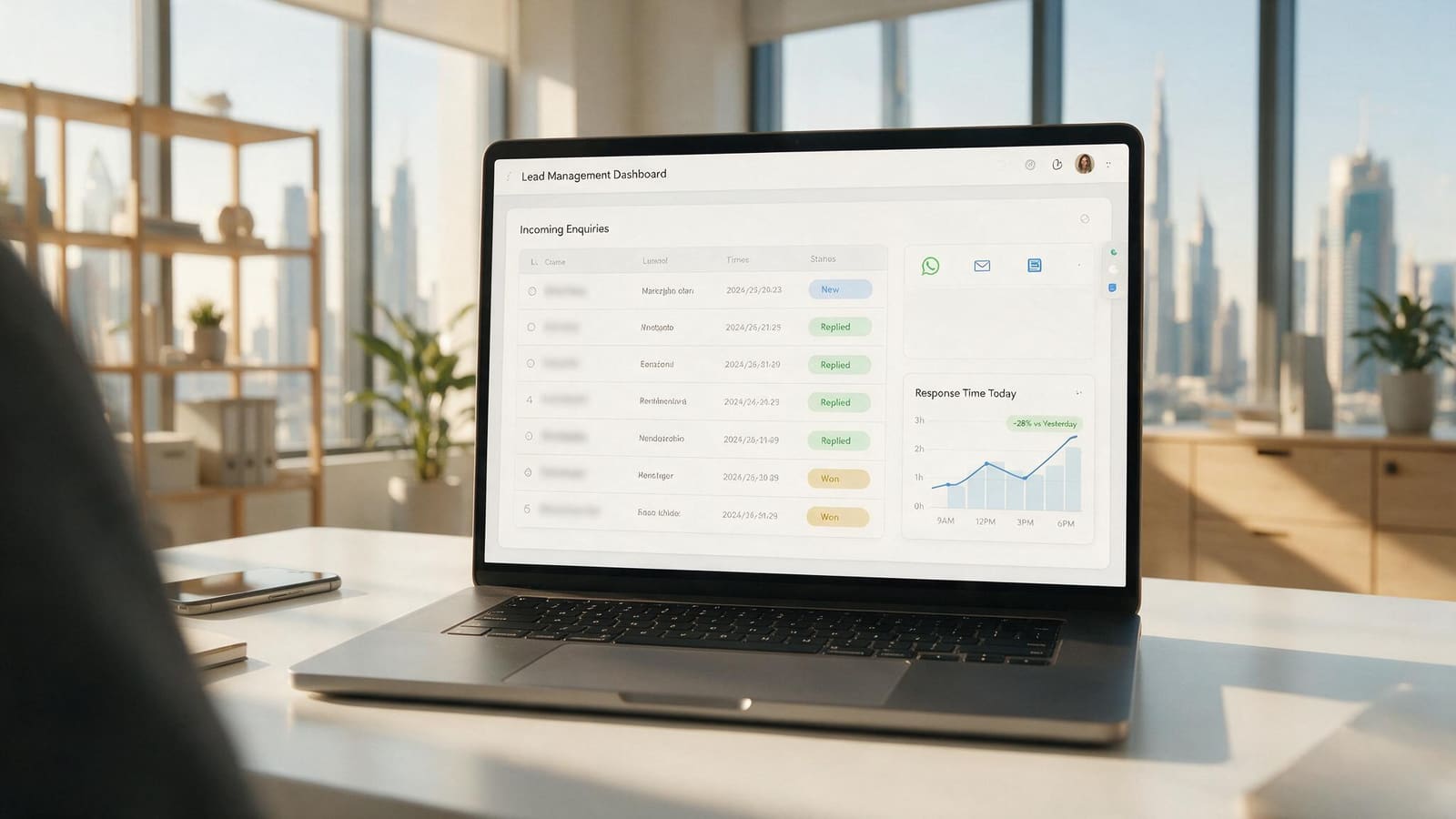
A buyer contacting you has almost always contacted others in the same sitting. Whoever replies first sets the questions everyone else gets judged against. A site that generates enquiries into an inbox nobody owns generates nothing.
5. Nothing is being measured, so nobody knows which of the above it is
Forms fail silently by design. The visitor sees a thank-you screen, because that is a front-end behaviour that runs whether or not the message was delivered. The business sees fewer enquiries and calls it a quiet month.
Test it the only way that proves anything: submit the form yourself and confirm the message arrives at the real destination. Not the success message — the message.
What a conversion review looks at when you want to increase website conversions
A design review asks whether the site is any good. A review aimed at website enquiries asks a narrower question: what happens to somebody who arrives on this page ready to buy? They are different jobs, and being pleased with the first says nothing about the second.
- Which pages people actually land on, rather than the homepage everyone assumes they land on
- Whether each of those pages contains its own way to make contact
- What the form asks for, and how much of it is genuinely needed on first contact
- Where the enquiry is delivered, who owns that inbox, and how quickly it is answered in practice
- Whether analytics and form tracking were ever installed, and whether they still work after the last redesign
Do this before you buy traffic
The instinct when a site is not producing enquiries is to send it more visitors. It is worth resisting for one round, because advertising multiplies whatever the site currently does with a visitor. If that rate is very low, paid traffic buys a faster and more expensive demonstration of the fact. One client had already run the experiment:
"We have a website that we have spent a lot of money on and we have tried google ads. Is there something we are missing?"
They were. The site was fine. The path through it was not, and every dirham of ad spend was being poured into the same gap.
Fix the path first. It costs less than a month of ads, it does not stop when the budget does, and it makes every channel you add afterwards work better — which is the opposite of the order most people do it in.